The Twelve Western Zodiac Signs Explained
How the constellations along the ecliptic became the basis for astrology.
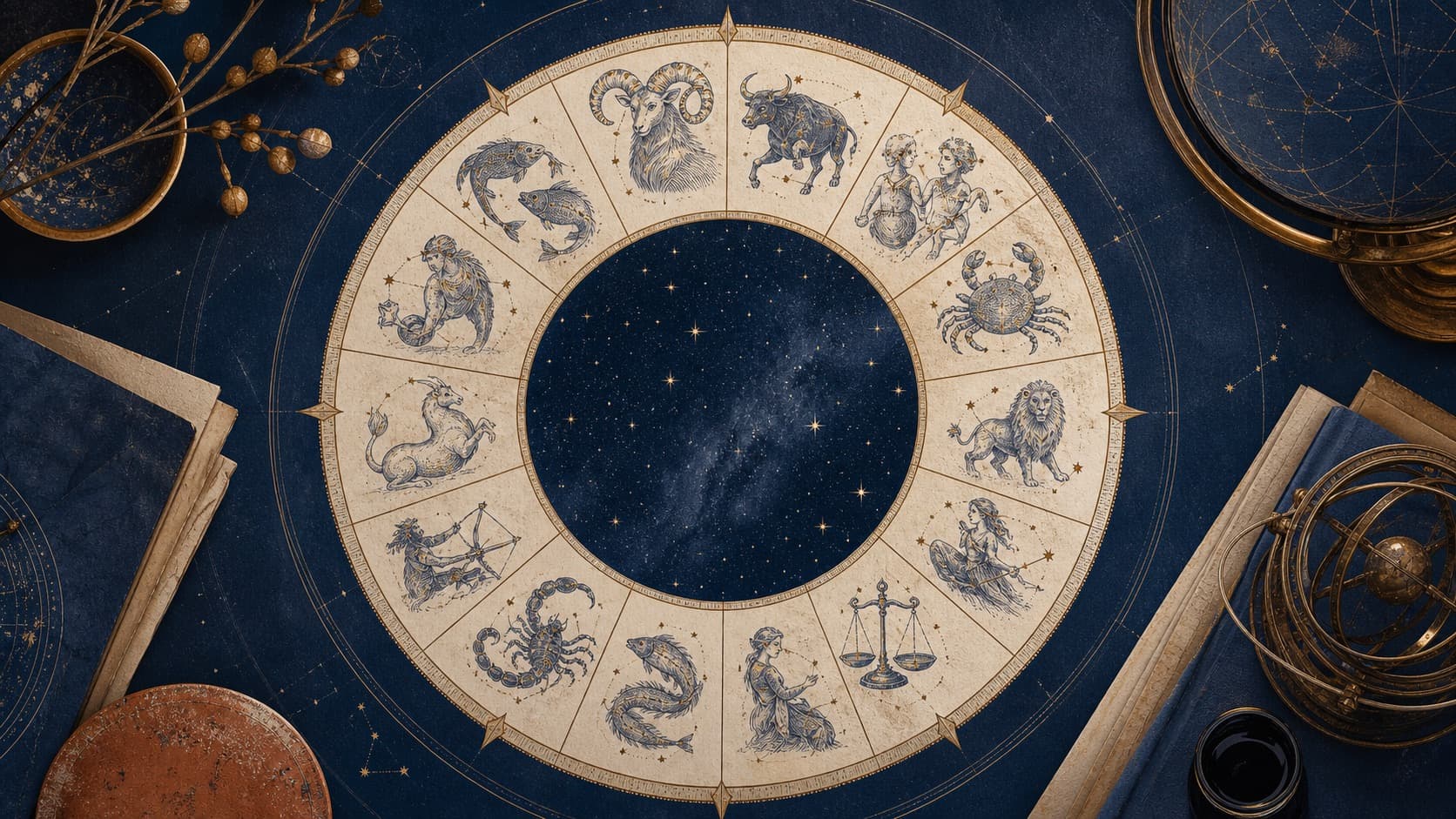
The twelve signs of the Western zodiac — Aries through Pisces — are among the most recognizable symbols in the world. Their origin lies in astronomy long before they became astrology.
The Path of the Sun
As Earth orbits the Sun over a year, the Sun appears to move against the background stars along a path called the ecliptic. The ancient Babylonians divided this path into twelve equal segments, each named after a constellation it passed through.
These twelve became the zodiac — from the Greek *zodiakos*, meaning "circle of animals."
The Twelve Signs and Their Dates
Each sign corresponds to roughly a month: - Aries (Mar 21–Apr 19), Taurus (Apr 20–May 20), Gemini (May 21–Jun 20) - Cancer (Jun 21–Jul 22), Leo (Jul 23–Aug 22), Virgo (Aug 23–Sep 22) - Libra (Sep 23–Oct 22), Scorpio (Oct 23–Nov 21), Sagittarius (Nov 22–Dec 21) - Capricorn (Dec 22–Jan 19), Aquarius (Jan 20–Feb 18), Pisces (Feb 19–Mar 20)
The Four Elements
Astrology groups the signs into four elements, each said to share temperament: - Fire (Aries, Leo, Sagittarius) — passionate and energetic - Earth (Taurus, Virgo, Capricorn) — practical and grounded - Air (Gemini, Libra, Aquarius) — intellectual and communicative - Water (Cancer, Scorpio, Pisces) — emotional and intuitive
Astrology vs Astronomy
It's worth being clear: the zodiac's link to personality and destiny is not supported by science. Moreover, due to a slow wobble in Earth's axis called precession, the constellations have shifted since Babylonian times — the Sun is no longer in the constellation your "sign" claims.
Why It Endures
Despite this, the zodiac remains immensely popular. It offers a shared language for talking about personality, a sense of identity, and a bit of fun. Enter your birthday into a zodiac calculator and you'll get your sign instantly — just remember it's culture and curiosity, not astronomy.