Daylight Saving Time: A Complete Guide
Why we change the clocks twice a year, who started it, and the ongoing debate to abolish it.
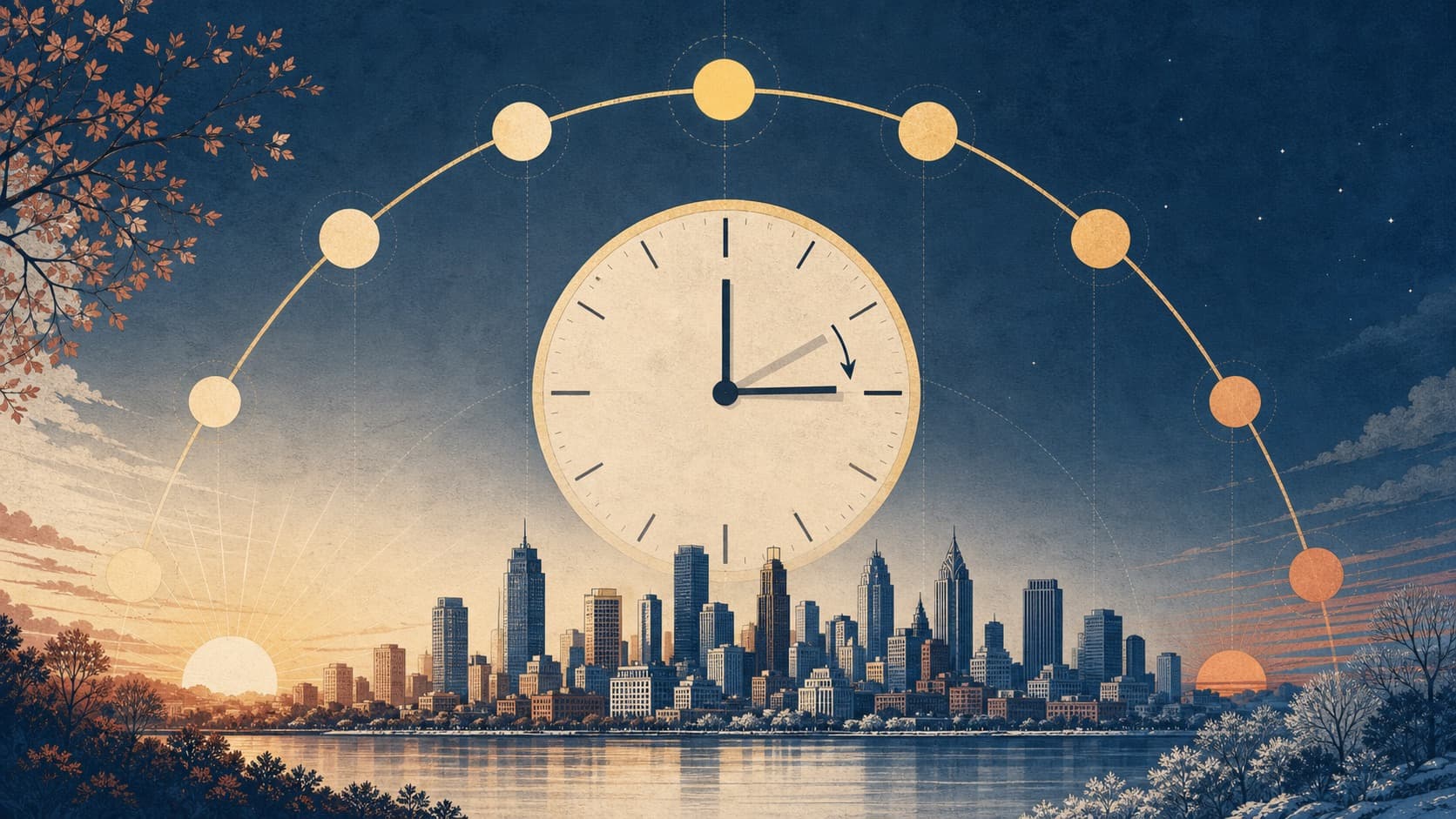
Twice a year, much of the world shifts its clocks by an hour. The practice is loved by some, hated by many, and misunderstood by almost everyone.
What Is Daylight Saving Time?
Daylight Saving Time (DST) is the practice of moving clocks forward by one hour during warmer months so that evening daylight lasts longer, then moving them back in autumn. The mnemonic is "spring forward, fall back."
Who Invented It?
The idea is often credited to Benjamin Franklin, who joked about it in 1784, but the first serious proposal came from New Zealand entomologist George Hudson in 1895, who wanted more daylight to collect insects after work.
Germany became the first country to implement DST nationally in 1916, during World War I, to conserve coal. Other nations quickly followed.
How It Works Today
In the United States, clocks spring forward on the second Sunday in March and fall back on the first Sunday in November. The European Union shifts on the last Sunday in March and the last Sunday in October.
Crucially, these dates don't align — creating a few weeks each year when the usual time difference between, say, New York and London is temporarily off by an hour.
Who Doesn't Observe DST?
Most of the world does not use DST. It's largely confined to North America, Europe, and parts of the Middle East and Oceania. Countries near the equator have little reason to bother, since day length barely changes through the year. Japan, India, and China observe no DST at all.
The Growing Debate
Research increasingly questions DST's benefits. Studies link the spring transition to: - A short-term spike in heart attacks and strokes - More traffic accidents in the days after the change - Disrupted sleep and reduced productivity
Energy savings — the original justification — turn out to be negligible in modern economies. Many regions are now moving to abolish the clock change and adopt permanent standard or summer time.
Practical Tips
If you schedule across regions, always confirm times around the March and October transition windows. A timezone converter that accounts for DST will save you from the classic "we joined the call an hour early" mistake.