Military Time Conversion: 12-Hour and 24-Hour Guide
Convert military time and 24-hour time by hand, understand 0000 vs 2400, and use practical examples for common AM and PM times.
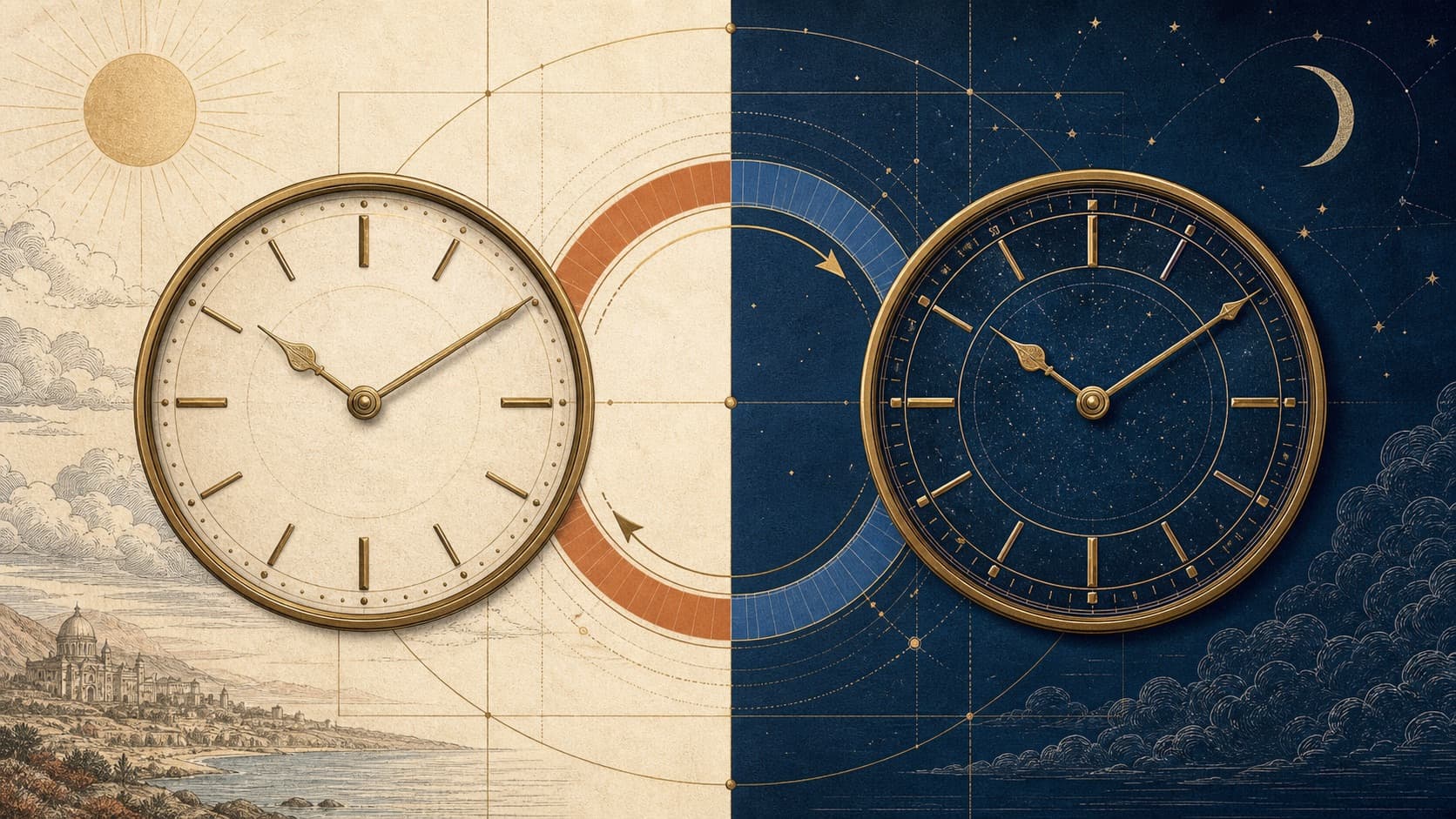
Military time conversion becomes easy once you know that the clock keeps counting after noon. Instead of returning to 1:00 PM, the 24-hour clock continues to 13:00. Military notation usually removes the colon, so 13:30 becomes 1330.
Military Time and the 24-Hour Clock
The terms are often used as synonyms, especially in the United States, but there is a small distinction.
The 24-hour clock writes hours from 00 through 23 and commonly uses a colon, such as 18:45. Military time normally uses four digits without a colon, such as 1845. Military communication may also add a time-zone letter.
Both systems avoid the AM and PM ambiguity of the 12-hour clock.
Convert AM Times to Military Time
For most AM times, keep the hour and add a leading zero when needed:
- 1:15 AM becomes 0115
- 6:30 AM becomes 0630
- 9:05 AM becomes 0905
- 11:45 AM becomes 1145
Midnight is the exception. 12:00 AM is 0000, not 1200.
Convert PM Times to Military Time
For PM times from 1:00 PM through 11:59 PM, add 12 to the hour and remove the colon:
- 1:00 PM becomes 1300
- 3:25 PM becomes 1525
- 7:40 PM becomes 1940
- 11:59 PM becomes 2359
Noon is another exception. 12:00 PM is 1200 because the hour is already 12.
Convert Military Time Back to AM or PM
Use these rules:
- 0000 through 0059 correspond to 12:00 AM through 12:59 AM
- 0100 through 1159 keep the same hour and use AM
- 1200 through 1259 keep the same hour and use PM
- 1300 through 2359 subtract 12 from the hour and use PM
Examples:
- 0045 becomes 12:45 AM
- 0830 becomes 8:30 AM
- 1215 becomes 12:15 PM
- 1640 becomes 4:40 PM
- 2305 becomes 11:05 PM
What Do 0000 and 2400 Mean?
NIST explains the useful distinction this way:
- 0000 is midnight at the beginning of a date
- 2400 is midnight at the end of a date
For example, Monday 2400 and Tuesday 0000 describe the same instant. In everyday schedules, 0000 is usually clearer because software and digital clocks commonly use hours from 00 through 23.
If a deadline says "midnight Friday," write the date and exact notation. Midnight can mean either the beginning or end of Friday in casual language.
How Military Time Is Spoken
Military time is normally read digit by digit or as hundreds.
- 0600: "zero six hundred"
- 0930: "zero nine thirty"
- 1400: "fourteen hundred"
- 1845: "eighteen forty-five"
The word "hours" may follow the number. Exact pronunciation varies by organization, but the four-digit written form remains unambiguous.
Time-Zone Letters and Zulu Time
A military time may include a letter that identifies a time zone. The best-known example is Z, pronounced "Zulu," for UTC.
A time written as 1530Z means 15:30 UTC, not 15:30 in the reader's local zone. The letter matters whenever people in different locations coordinate an event.
Do not assume a military-looking time is local. Check whether a zone letter, UTC offset, or location accompanies it.
Common Conversion Mistakes
Watch for these errors:
- Treating 12:00 AM as 1200
- Adding 12 to 12:30 PM and producing 2430
- Dropping a leading zero from a morning time
- Confusing 24-hour clock notation with a duration
- Ignoring the time zone attached to a military time
- Writing 24:30, which is not a normal time of day
A Fast Mental Shortcut
For AM, keep the hour except that midnight becomes 00. For PM, keep 12 as 12 and add 12 to hours 1 through 11.
That rule handles nearly every conversion. The four-digit format then makes schedules easier to scan, sort, and share without wondering whether a time belongs to the morning or evening.