What Does YYYY-MM-DD Mean? The ISO Date Format Explained
YYYY-MM-DD writes the four-digit year, two-digit month, and two-digit day. Learn how to read, validate, sort, and use the format safely.
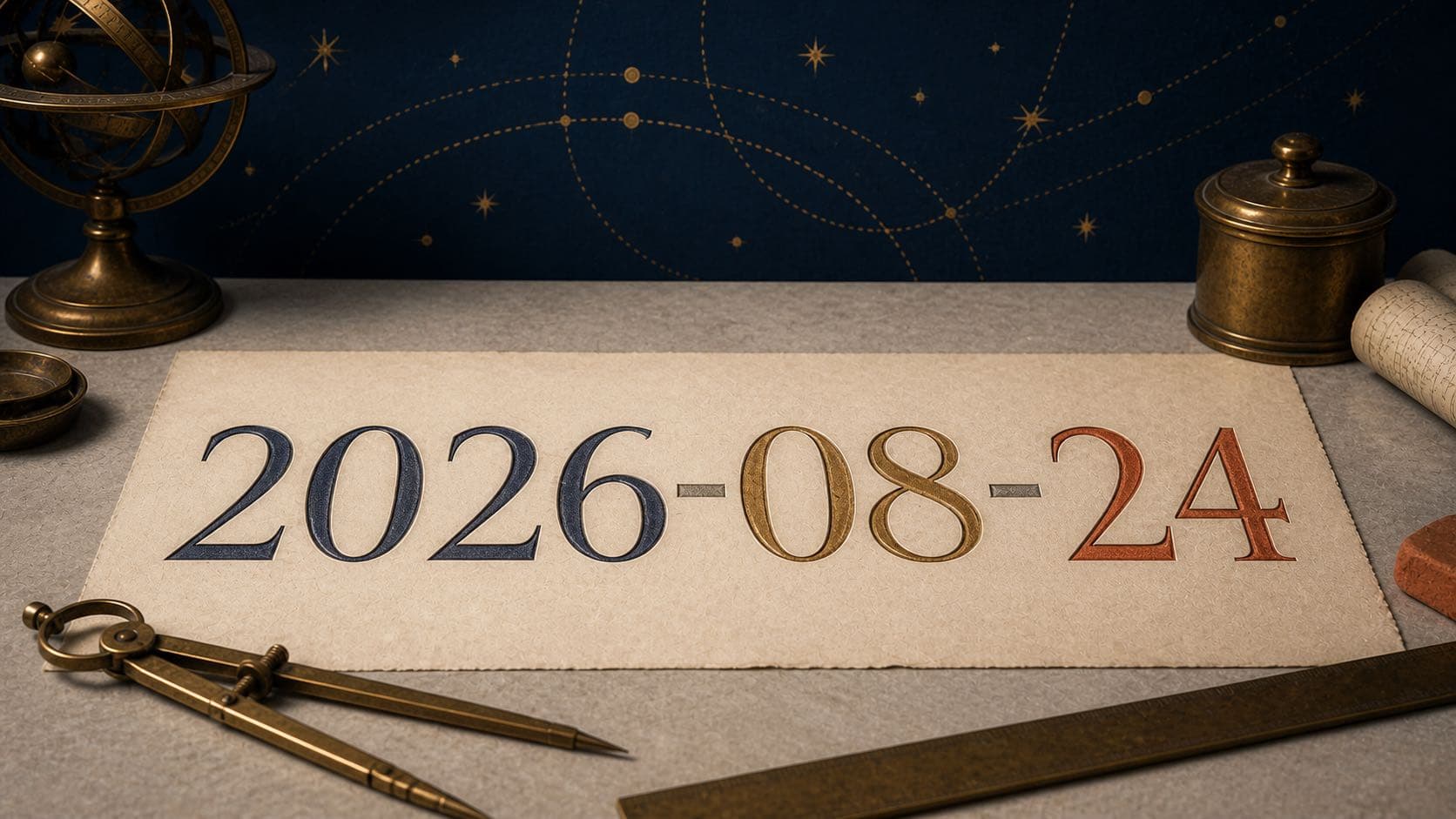
YYYY-MM-DD means four digits for the year, two for the month, and two for the day. For example, 2026-08-14 means August 14, 2026.
Reading Each Field
YYYY: four-digit year, such as 2026MM: month from 01 through 12DD: day from 01 through 31, limited by the selected month and year
The hyphens separate fields. Leading zeros keep months and days at a consistent width.
Relationship to ISO 8601
The extended calendar-date form in ISO 8601 uses year-month-day order. It is unambiguous when all parties follow the standard and avoids the month/day confusion of values such as 03/04/2026.
A date alone does not identify a time of day or time zone. 2026-08-14 is a calendar date. 2026-08-14T15:30:00Z is a timestamp identifying a UTC instant.
Why Year-First Dates Sort Well
Fixed-width YYYY-MM-DD strings sort chronologically in ordinary ascending text order. The largest unit comes first, followed by progressively smaller units.
This property depends on consistent four-digit years and two-digit months and days. 2026-8-4 is readable but loses the fixed-width sorting advantage.
Validate the Date, Not Just the Pattern
A string can match the shape while naming an impossible date. 2026-02-30 has valid-looking fields but February never has 30 days. Leap-day validation must use the year: 2024-02-29 is valid, while 2026-02-29 is not.
Common Mistakes
- Reading MM as minutes; in a date-only pattern it means month
- Using lowercase
mmin a formatting library that distinguishes month from minute - Assuming a date-only value is midnight UTC
- Dropping leading zeros in machine data
- Treating a format pattern as if it were the literal date
Formatting tokens vary by programming language. Some libraries use yyyy; others use YYYY for a week-based year. Check the library's documentation rather than copying a pattern blindly.
Best Uses
YYYY-MM-DD is a strong choice for filenames, data exchange, logs with separate time fields, database displays, and international communication. For prose written for a general audience, “14 August 2026” can be equally clear.
The key is to distinguish a date from a timestamp and document the expected format at every data boundary.