12 AM vs 12 PM: Is Midnight AM or PM?
In common usage 12 AM is midnight and 12 PM is noon, but both labels can confuse. Learn safer 12-hour and 24-hour ways to write them.
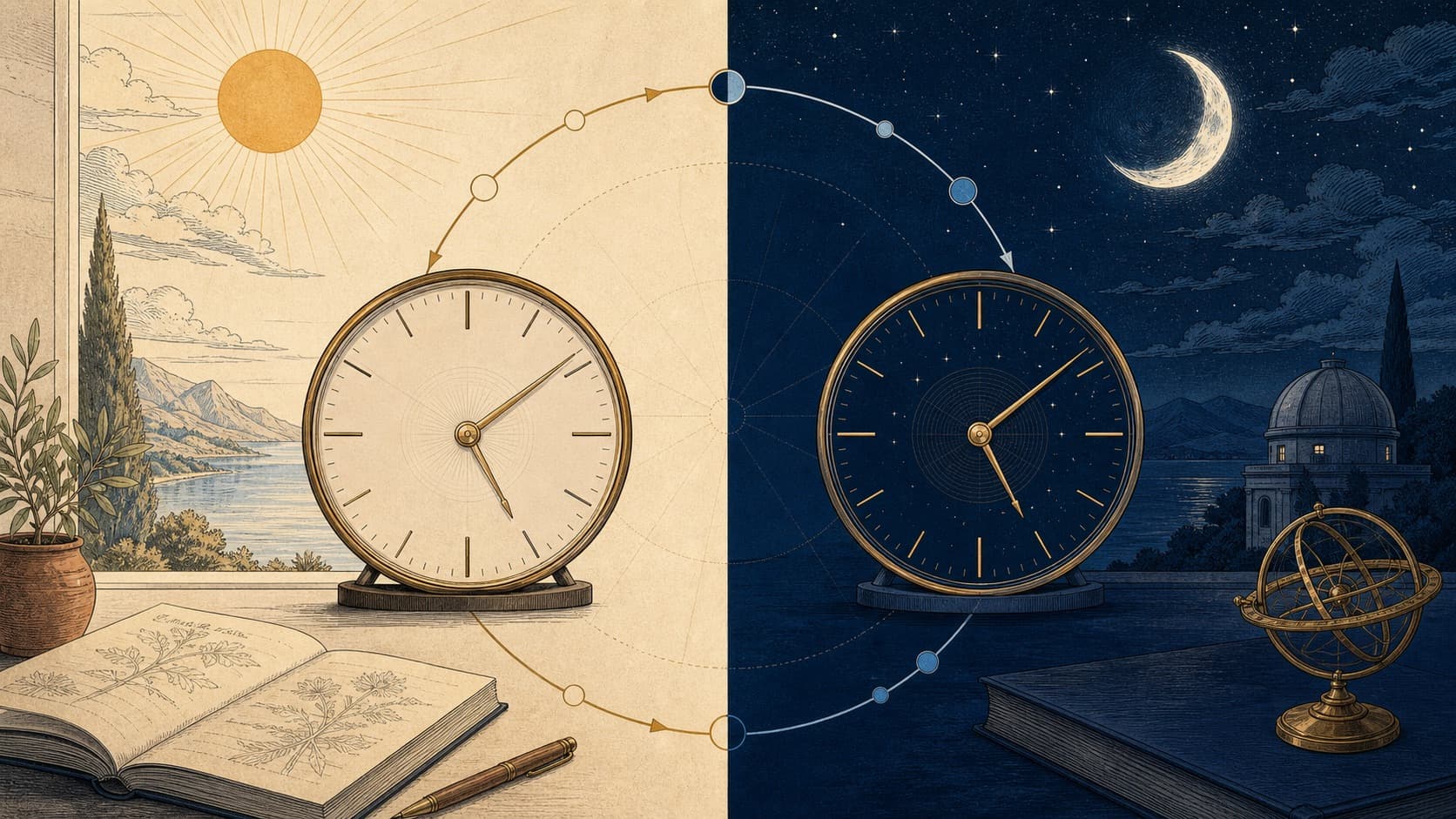
In everyday digital clocks, 12 AM usually means midnight and 12 PM usually means noon. However, the labels are logically awkward and can cause real scheduling mistakes.
The Common Convention
- 12:00 AM = midnight
- 12:00 PM = noon
- 12:30 AM = thirty minutes after midnight
- 12:30 PM = thirty minutes after noon
This convention is widely used by phones, calendars, booking systems, and businesses.
Why It Feels Backward
AM comes from the Latin ante meridiem, meaning before midday. PM comes from post meridiem, meaning after midday.
At exactly noon, the time is neither before nor after midday. Midnight is also a boundary between dates rather than an ordinary hour inside one half of the day. That makes 12 AM and 12 PM less intuitive than 11 AM or 1 PM.
NIST describes noon and midnight labels as ambiguous and recommends clearer wording when confusion matters.
What Happens at Noon
The sequence around noon is:
- 11:59 AM
- 12:00 noon, commonly displayed as 12:00 PM
- 12:01 PM
- 1:00 PM
The PM period begins immediately after noon. Digital systems normally switch the suffix when the display reaches 12:00.
What Happens at Midnight
The sequence around midnight is:
- 11:59 PM on the old date
- 12:00 midnight, commonly displayed as 12:00 AM on the new date
- 12:01 AM on the new date
- 1:00 AM
The date changes at midnight. This creates a second ambiguity: midnight can mean the end of one date or the beginning of the next.
Safer Ways to Write Noon and Midnight
For ordinary conversation, write noon or midnight instead of 12 AM or 12 PM.
For deadlines, tickets, medical instructions, contracts, and system logs, include the full date and use a clear form:
- July 15 at noon
- July 15 at 11:59 PM
- July 16 at 12:01 AM
- July 16 at 00:00 in 24-hour time
Using 11:59 PM or 12:01 AM avoids the exact boundary when a legal deadline would otherwise be unclear.
24-Hour Clock Equivalents
In 24-hour time:
- 12:00 AM becomes 00:00
- 1:00 AM becomes 01:00
- 11:59 AM remains 11:59
- 12:00 PM remains 12:00
- 1:00 PM becomes 13:00
- 11:59 PM becomes 23:59
Some schedules use 24:00 to mean the end of a named date, while 00:00 means the beginning. Software support for 24:00 varies, so 00:00 with the next date is often safer for data exchange.
A Simple Memory Rule
Think of 12 as the reset point:
- At midnight, the hour resets to 12 AM and then advances to 1 AM
- At noon, the suffix resets to PM and then the hour advances to 1 PM
Another shortcut is to remember that 12:01 AM is clearly after midnight and 12:01 PM is clearly after noon.
Converting 12-Hour Time
To convert AM times to 24-hour time, keep the hour except change 12 AM to 00.
To convert PM times, keep 12 PM as 12 and add 12 to hours 1 through 11. For example, 3:45 PM becomes 15:45.
Best Practice
Use the common convention when a system requires AM or PM. Use the words noon and midnight in prose. Use a full date plus 24-hour time when precision matters.
That small change prevents the most common twelve-hour-clock error: arriving or submitting something twelve hours late.